 | |||
Barberry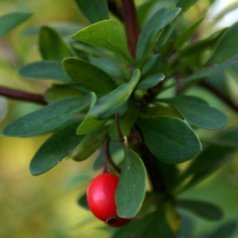 Barberry is a thorny bush with tough leaves with small yellow flowers in spring that turn to berries by fall. Common in Europe and North America, it is often seen in landscaping. The bark of both the stem and root and also the berries are used in herbal medicine. Use of it goes back a few centuries. Used in folk medicine it was reported to treat gastritis, nausea, diarrhea and to increase appetite in those with poor appetite. Now a days, it is used in Middle Eastern countries for GERD and gallbladder diseases. Barberry is a thorny bush with tough leaves with small yellow flowers in spring that turn to berries by fall. Common in Europe and North America, it is often seen in landscaping. The bark of both the stem and root and also the berries are used in herbal medicine. Use of it goes back a few centuries. Used in folk medicine it was reported to treat gastritis, nausea, diarrhea and to increase appetite in those with poor appetite. Now a days, it is used in Middle Eastern countries for GERD and gallbladder diseases. The active constituent, barberine, is and effective anti-bacterial and is also found in coptis, goldenseal, and grape root. It inhibits bacteria from binding to human cells and stimulates certain immune system cells to function better. Berbermine, another alkaloid found in barberry, helps reduce inflammation and is useful in ameobic hepatitis and rheumatoid arthritis. Benefits of Barberry
Considerations For UseAvailable in capsules, oinments, tablets and tinctures. The tincture can be used to make compresses.When using Barberry in treatment of diarrhea, if it is bacterial diarrhea such as Traveler's (E.coli) it is best to combine an anti-biotic with this herb. Barbarine will help with the symptoms of diarrhea while the anti-biotic will kill the offending bacteria. The herb acts on smooth muscle which lines the small intestines. Vitamin B6 and amino acid L-histidine interfer with berberine's antibacterial action. You should not use barberry to treat acne or yeast infections if you are taking these supplements. Stimulates bile production so do not use if you have active gallstones. May interfer with sperm production. Do not use if you are trying to become a father. Do not use in pregnancy as it may increase bilirubin production in the liver of the baby. May also interfer with the action of tetracycline and may also lower blood sugar. Use with caution if diabetic. May aggrevate numbness and tingling in Raynaud's syndrome but this is usually temporary. Drug InteractionsAnticoagulants: blood thinners such as Coumadin and Warfarin may have decreased effectiveness in the presence of this herb. Anti-histamines: may increase the effects of anti-histamines Anti-hypertensives: may increase the effects of blood pressure medications. Do not take this herb if you are being treated for hypertension. Celebrex: may have an interaction. Diabetic medications: Diabetic medications are formulated to lower blood sugar and unfortunately, so does Barberine. Therefore, the herb makes the effects osf the medications strongers. Do not take it if diabetic as you may provoke hypoglycemic episodes. |
| ||
|
Information
Treatment
How To
Legal
| |||
 | Home Page | Privacy Policy |Medical Disclaimer |Written by Mary Kay Betz |
Copyright©
2008-2012
 Return to top
 | |||



